Serving homeowners across Coral SpringsIndependent water-treatment information & referral service

Coral Springs, Florida

Whole-Home Water Filtration in Coral Springs

Coral Springs Water Filtration helps homeowners compare whole-home water filtration using local provider context, practical testing, equipment specifications, installation planning, and long-term ownership—not a one-size-fits-all sales package.

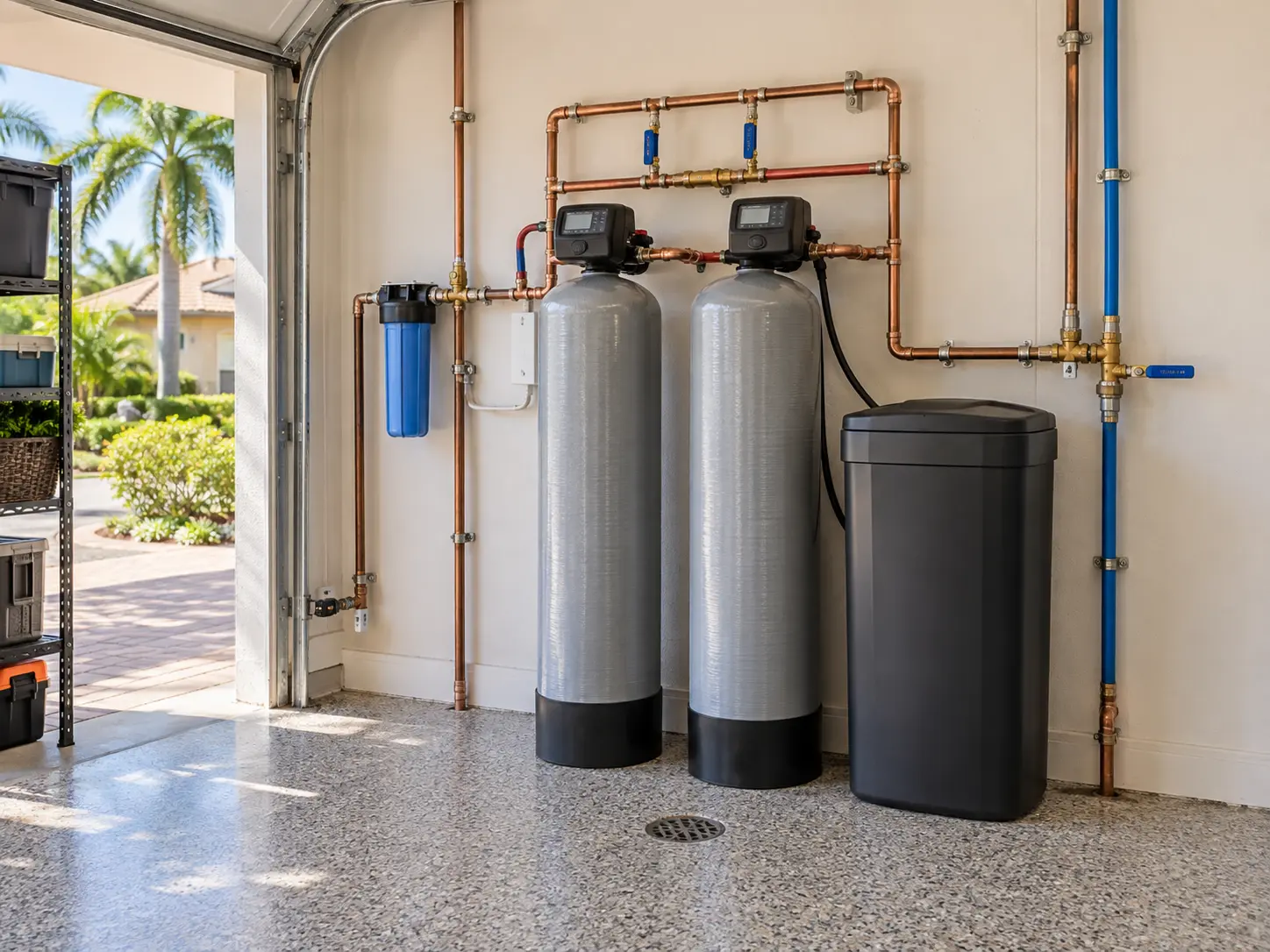
Whole-home filtration tanks installed in a Coral Springs-style residential garage
Independent referral guidanceEquipment shown is generic and unbranded.
Best suited forTaste, odor, sediment or whole-house treatment goals
Responsible first stepConfirm the water provider and treatment target
Planning range$1,800–$5,500
Local ruleConfirm the Coral Springs provider first

The direct answer

Is whole-home water filtration worth considering?

Compare point-of-entry carbon, sediment, catalytic media, and combination systems for Coral Springs homes. The right choice depends on a clearly defined household goal, the exact utility or well source, relevant measurements, peak flow, installation access, and a maintenance plan the owner can realistically follow.

Coral Springs contains four provider areas: the City of Coral Springs, Coral Springs Improvement District, North Springs Improvement District, and Royal Water Works. The city name alone does not identify the source or treatment serving an address. Check the utility bill before applying a public report or selecting equipment.

01

Understand the option

What whole-home filtration actually does

A point-of-entry filter treats water near the service entry so showers, laundry, fixtures, and most taps receive treated water. The correct media depends on a defined goal. Activated carbon is commonly discussed for chlorine, taste, and odor; catalytic carbon may be proposed for some disinfectant applications; sediment filtration captures particles above a stated micron rating. No single tank removes every dissolved substance. A provider should identify the treatment objective, media, contact time, flow rating, pressure loss, replacement schedule, and certification claims rather than calling a unit a universal purifier.

What should a Coral Springs homeowner verify?

Ask the provider to connect this recommendation to your actual water provider, measured conditions, peak household demand, plumbing access, equipment specification, maintenance schedule, and written exclusions. A technology is useful only when the proposed configuration addresses a defined goal at the home’s real flow rate.

02

Understand the option

Coral Springs utility differences matter

Coral Springs is served by four water providers: the City of Coral Springs, Coral Springs Improvement District, North Springs Improvement District, and Royal Water Works. A citywide assumption can therefore be wrong for an individual address. The City’s 2025 report identifies the Biscayne Aquifer as its source and describes lime softening, filtration, disinfection, and fluoridation. It reports that regulated drinking water met federal and state requirements. Home treatment should be discussed as a preference for taste, mineral scale, appliance protection, or point-of-use polishing—not as proof that compliant utility water is unsafe. The assessment should therefore begin by identifying the property’s provider. City water data cannot automatically be applied to an address served by another district, and a district boundary map is more reliable than a city name alone.

What should a Coral Springs homeowner verify?

Ask the provider to connect this recommendation to your actual water provider, measured conditions, peak household demand, plumbing access, equipment specification, maintenance schedule, and written exclusions. A technology is useful only when the proposed configuration addresses a defined goal at the home’s real flow rate.

03

Plan the system

Carbon, sediment, and specialty media

Granular activated carbon offers a large adsorptive surface and is frequently used for aesthetic chlorine reduction. Carbon blocks provide tighter structure but are more common at individual fixtures. Backwashing mineral tanks can manage larger household flows and redistribute or clean media, while cartridge housings are simpler but require periodic replacement. Specialty media should be chosen only for a documented target and installed within its operating limits. Ask how the provider calculated empty-bed contact time, peak flow, backwash rate, media life, and disposal or replacement plan.

What should a Coral Springs homeowner verify?

Ask the provider to connect this recommendation to your actual water provider, measured conditions, peak household demand, plumbing access, equipment specification, maintenance schedule, and written exclusions. A technology is useful only when the proposed configuration addresses a defined goal at the home’s real flow rate.

04

Plan the system

Sizing for a Florida household

Bedrooms alone do not determine size. Simultaneous showers, large tubs, irrigation cross-connections, tankless heaters, high-flow fixtures, pipe diameter, incoming pressure, and household schedule all affect peak demand. Undersized equipment can create noticeable pressure loss or insufficient contact time. Oversizing can increase cost and may create poor service characteristics. The installer should document the service-line size, expected peak flow, tank or cartridge specification, bypass arrangement, and accessible clearance for future service.

What should a Coral Springs homeowner verify?

Ask the provider to connect this recommendation to your actual water provider, measured conditions, peak household demand, plumbing access, equipment specification, maintenance schedule, and written exclusions. A technology is useful only when the proposed configuration addresses a defined goal at the home’s real flow rate.

05

Plan the system

Installation in garages and utility spaces

Many Coral Springs installations are placed in garages or exterior-adjacent service areas, but the exact location depends on the plumbing entry, drainage, electrical availability, weather exposure, and homeowner access. Equipment must not block panels, water heaters, doors, vehicles, or required working clearances. A neat installation includes a full-flow bypass, supported piping, labeled flow direction, accessible isolation points, and a route that avoids trip hazards. Exterior equipment may need protection from sun, rain, impact, and landscape maintenance.

What should a Coral Springs homeowner verify?

Ask the provider to connect this recommendation to your actual water provider, measured conditions, peak household demand, plumbing access, equipment specification, maintenance schedule, and written exclusions. A technology is useful only when the proposed configuration addresses a defined goal at the home’s real flow rate.

06

Compare the proposal

Maintenance and ownership

Carbon capacity is finite. Replacement timing depends on media amount, water chemistry, disinfectant load, household volume, and manufacturer instructions—not merely the calendar. Cartridges need pressure-drop monitoring and sanitary handling. Backwashing valves require correct time, flow, and drain connections. Homeowners should receive a written service schedule, model and media information, startup readings, and instructions for extended vacancy. A system that cannot be maintained conveniently is unlikely to deliver consistent results over its intended life.

What should a Coral Springs homeowner verify?

Ask the provider to connect this recommendation to your actual water provider, measured conditions, peak household demand, plumbing access, equipment specification, maintenance schedule, and written exclusions. A technology is useful only when the proposed configuration addresses a defined goal at the home’s real flow rate.

07

Compare the proposal

Costs and proposal comparison

Installed pricing varies with measured water conditions, flow demand, plumbing access, drain and electrical requirements, equipment certification, valve capacity, media volume, warranty, and permit or code considerations. A compact point-of-use unit can cost hundreds of dollars; complete whole-home projects commonly move into the thousands. Those broad planning ranges are not quotes. Written proposals should separate equipment, installation, consumables, ongoing service, and optional upgrades so homeowners can compare total ownership cost.

What should a Coral Springs homeowner verify?

Ask the provider to connect this recommendation to your actual water provider, measured conditions, peak household demand, plumbing access, equipment specification, maintenance schedule, and written exclusions. A technology is useful only when the proposed configuration addresses a defined goal at the home’s real flow rate.

08

Compare the proposal

What a professional visit should include

A responsible project begins with the address and water provider, followed by an on-site conversation about symptoms and priorities. A professional may measure hardness, disinfectant residual, pH, total dissolved solids, iron, or other parameters relevant to the source and proposed equipment. The next steps are equipment sizing, a plumbing and drain review, a written scope, installation, startup, verification for leaks and proper regeneration or flushing, and owner instruction. Sampling should guide selection; sales demonstrations should not be treated as a medical or safety diagnosis.

What should a Coral Springs homeowner verify?

Ask the provider to connect this recommendation to your actual water provider, measured conditions, peak household demand, plumbing access, equipment specification, maintenance schedule, and written exclusions. A technology is useful only when the proposed configuration addresses a defined goal at the home’s real flow rate.

Coral Springs context

Local conditions change the installation conversation.

Homes near University Drive, Coral Ridge Drive, Wiles Road, Sample Road, Atlantic Boulevard, Riverside Drive, and Royal Palm Boulevard may sit in different provider areas. Neighborhood references such as Ramblewood, Maplewood, Eagle Trace, Heron Bay, and the Country Club area help describe service geography, but the utility bill and official district information remain the reliable evidence.

Garage and side-yard installations should account for the main-water entry, drain access, electrical needs, vehicle clearance, sunlight, rain, irrigation spray, storm exposure, landscaping, and future service space. Visible exterior equipment may also involve HOA requirements, permits, or code considerations that the actual provider must confirm.

Read the Coral Springs water district guide →

Before comparing proposals

  1. Confirm the exact provider or private well.
  2. Write down the symptom and desired outcome.
  3. Measure the parameters relevant to that decision.
  4. Document pipe size, pressure, peak demand and installation access.
  5. Compare equipment, settings, maintenance, warranty and exclusions in writing.

Frequently asked questions

Whole-Home Water Filtration: practical answers

Whole-Home Water Filtration questions from Coral Springs homeowners

Can I choose equipment from my ZIP code alone?

No. Coral Springs has four water-provider areas, and even the correct utility report does not replace testing at the property when equipment sizing depends on current conditions.

Does this mean Coral Springs tap water is unsafe?

No. The City’s 2025 report states that its drinking water met federal and state requirements. Home treatment is often considered for taste, scale, appliance protection, or point-of-use preferences.

Do you install equipment?

Coral Springs Water Filtration is an independent referral and information service. We connect requests with an independent provider; we do not perform installation or testing ourselves.

What should I compare in proposals?

Compare the treatment objective, test basis, equipment model and certification, flow rating, installation scope, maintenance, consumables, warranty, and total ownership cost.

A clearer next step

Discuss whole-home water filtration for your Coral Springs home.

Share your provider, symptoms, household demand, existing equipment, and installation location. An independent provider may follow up to discuss testing and practical options.

Request a Water Conversation →
Call 000-000-0000