Serving homeowners across Coral SpringsIndependent water-treatment information & referral service

Coral Springs, Florida

Water Softener Systems in Coral Springs

Coral Springs Water Filtration helps homeowners compare water softener systems using local provider context, practical testing, equipment specifications, installation planning, and long-term ownership—not a one-size-fits-all sales package.

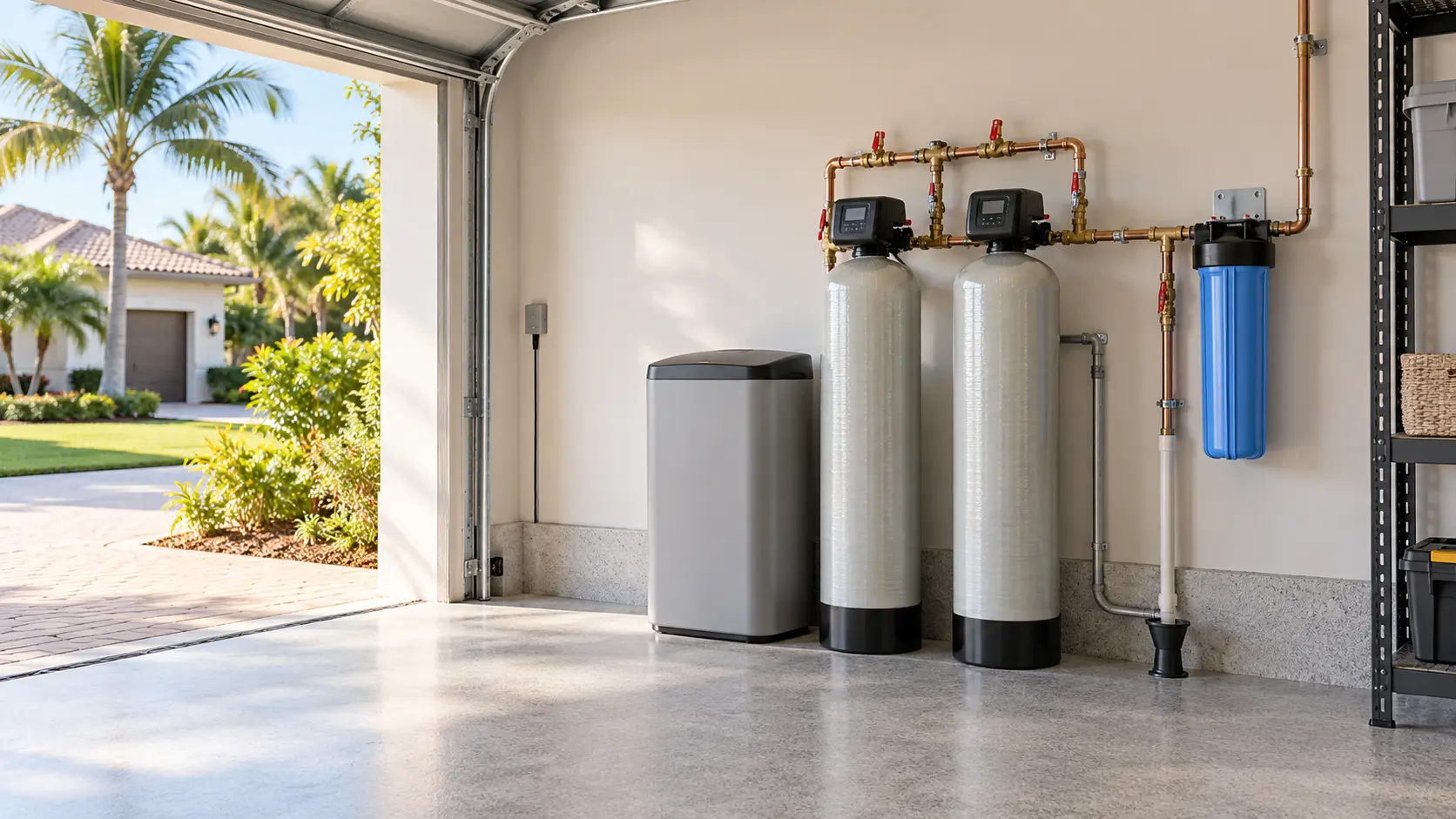
Water softener and filtration equipment installed in a clean residential garage
Independent referral guidanceEquipment shown is generic and unbranded.
Best suited forScale, spotting and soap-performance concerns
Responsible first stepMeasure hardness at the home before sizing
Planning range$1,800–$4,500
Local ruleConfirm the Coral Springs provider first

The direct answer

Is water softener systems worth considering?

Understand hardness testing, resin sizing, salt use, regeneration, and installation choices in Coral Springs. The right choice depends on a clearly defined household goal, the exact utility or well source, relevant measurements, peak flow, installation access, and a maintenance plan the owner can realistically follow.

Coral Springs contains four provider areas: the City of Coral Springs, Coral Springs Improvement District, North Springs Improvement District, and Royal Water Works. The city name alone does not identify the source or treatment serving an address. Check the utility bill before applying a public report or selecting equipment.

01

Understand the option

Softening is different from filtration

A conventional ion-exchange softener exchanges hardness minerals—primarily calcium and magnesium—for sodium or potassium ions. Its main purpose is controlling mineral scale and improving soap performance. It is not a disinfectant, carbon filter, or universal contaminant-removal device. “Salt-free softener” is often marketing shorthand for conditioning technologies that may alter scale behavior but do not remove hardness by ion exchange. Proposals should state whether the device actually reduces measured hardness and how performance is verified.

What should a Coral Springs homeowner verify?

Ask the provider to connect this recommendation to your actual water provider, measured conditions, peak household demand, plumbing access, equipment specification, maintenance schedule, and written exclusions. A technology is useful only when the proposed configuration addresses a defined goal at the home’s real flow rate.

02

Understand the option

Measure hardness at the property

Coral Springs is served by four water providers: the City of Coral Springs, Coral Springs Improvement District, North Springs Improvement District, and Royal Water Works. A citywide assumption can therefore be wrong for an individual address. The City’s 2025 report identifies the Biscayne Aquifer as its source and describes lime softening, filtration, disinfection, and fluoridation. It reports that regulated drinking water met federal and state requirements. Home treatment should be discussed as a preference for taste, mineral scale, appliance protection, or point-of-use polishing—not as proof that compliant utility water is unsafe. The City uses lime softening at the treatment plant, but distribution conditions and household expectations still vary. Online maps and national averages are not substitutes for a tap measurement. Ask for hardness in grains per gallon or milligrams per liter as calcium carbonate, and confirm whether the reading is raw, treated, or estimated.

What should a Coral Springs homeowner verify?

Ask the provider to connect this recommendation to your actual water provider, measured conditions, peak household demand, plumbing access, equipment specification, maintenance schedule, and written exclusions. A technology is useful only when the proposed configuration addresses a defined goal at the home’s real flow rate.

03

Plan the system

Resin, capacity, and flow

A softener is sized around compensated hardness, household demand, reserve capacity, and service flow—not a vague “number of people” chart alone. Higher-capacity resin tanks may provide longer intervals between regeneration, but programmed capacity should reflect efficient salt use. Flow-rate performance matters because a tank can technically have enough total capacity yet restrict or leak hardness during simultaneous demand. Ask for resin volume, valve model, continuous and peak service flow, programmed capacity, salt dose, and estimated gallons between regenerations.

What should a Coral Springs homeowner verify?

Ask the provider to connect this recommendation to your actual water provider, measured conditions, peak household demand, plumbing access, equipment specification, maintenance schedule, and written exclusions. A technology is useful only when the proposed configuration addresses a defined goal at the home’s real flow rate.

04

Plan the system

Regeneration and salt efficiency

Demand-initiated regeneration uses a meter to regenerate after calculated capacity is consumed. Calendar-based regeneration can waste salt and water when demand varies. Efficient settings generally trade some advertised maximum capacity for lower salt use per grain removed. The brine tank needs a stable location, accessible lid, overflow planning, and appropriate salt. Potassium chloride may be an option in some systems but usually costs more and may require adjusted settings. Local restrictions and drain requirements should be checked before installation.

What should a Coral Springs homeowner verify?

Ask the provider to connect this recommendation to your actual water provider, measured conditions, peak household demand, plumbing access, equipment specification, maintenance schedule, and written exclusions. A technology is useful only when the proposed configuration addresses a defined goal at the home’s real flow rate.

05

Plan the system

Plumbing and drain considerations

The softener should treat the intended indoor supply without unnecessarily softening irrigation or other lines unless specifically designed. The drain must handle backwash flow with a proper air gap where required, and the bypass must permit service without shutting off the home. Outdoor and garage installations should protect equipment from impact and exposure. If the home has older plumbing, a tankless heater, or unusual pressure, the installer should address those conditions in the written plan.

What should a Coral Springs homeowner verify?

Ask the provider to connect this recommendation to your actual water provider, measured conditions, peak household demand, plumbing access, equipment specification, maintenance schedule, and written exclusions. A technology is useful only when the proposed configuration addresses a defined goal at the home’s real flow rate.

06

Compare the proposal

Living with softened water

Softened water can feel different because soap rinses from skin differently and scale-forming minerals are reduced. Sodium added to water depends on incoming hardness and consumption; people with medically prescribed sodium restrictions should consult an appropriate healthcare professional and may prefer an unsoftened drinking tap or point-of-use reverse osmosis. Equipment settings should be checked after installation with hardness tests before and after the unit. Owners should know how to add salt, break up bridging, use bypass mode, and recognize continuous drain flow.

What should a Coral Springs homeowner verify?

Ask the provider to connect this recommendation to your actual water provider, measured conditions, peak household demand, plumbing access, equipment specification, maintenance schedule, and written exclusions. A technology is useful only when the proposed configuration addresses a defined goal at the home’s real flow rate.

07

Compare the proposal

Costs and long-term value

Installed pricing varies with measured water conditions, flow demand, plumbing access, drain and electrical requirements, equipment certification, valve capacity, media volume, warranty, and permit or code considerations. A compact point-of-use unit can cost hundreds of dollars; complete whole-home projects commonly move into the thousands. Those broad planning ranges are not quotes. Written proposals should separate equipment, installation, consumables, ongoing service, and optional upgrades so homeowners can compare total ownership cost.

What should a Coral Springs homeowner verify?

Ask the provider to connect this recommendation to your actual water provider, measured conditions, peak household demand, plumbing access, equipment specification, maintenance schedule, and written exclusions. A technology is useful only when the proposed configuration addresses a defined goal at the home’s real flow rate.

08

Compare the proposal

Selection and installation process

A responsible project begins with the address and water provider, followed by an on-site conversation about symptoms and priorities. A professional may measure hardness, disinfectant residual, pH, total dissolved solids, iron, or other parameters relevant to the source and proposed equipment. The next steps are equipment sizing, a plumbing and drain review, a written scope, installation, startup, verification for leaks and proper regeneration or flushing, and owner instruction. Sampling should guide selection; sales demonstrations should not be treated as a medical or safety diagnosis.

What should a Coral Springs homeowner verify?

Ask the provider to connect this recommendation to your actual water provider, measured conditions, peak household demand, plumbing access, equipment specification, maintenance schedule, and written exclusions. A technology is useful only when the proposed configuration addresses a defined goal at the home’s real flow rate.

Coral Springs context

Local conditions change the installation conversation.

Homes near University Drive, Coral Ridge Drive, Wiles Road, Sample Road, Atlantic Boulevard, Riverside Drive, and Royal Palm Boulevard may sit in different provider areas. Neighborhood references such as Ramblewood, Maplewood, Eagle Trace, Heron Bay, and the Country Club area help describe service geography, but the utility bill and official district information remain the reliable evidence.

Garage and side-yard installations should account for the main-water entry, drain access, electrical needs, vehicle clearance, sunlight, rain, irrigation spray, storm exposure, landscaping, and future service space. Visible exterior equipment may also involve HOA requirements, permits, or code considerations that the actual provider must confirm.

Read the Coral Springs water district guide →

Before comparing proposals

  1. Confirm the exact provider or private well.
  2. Write down the symptom and desired outcome.
  3. Measure the parameters relevant to that decision.
  4. Document pipe size, pressure, peak demand and installation access.
  5. Compare equipment, settings, maintenance, warranty and exclusions in writing.

Frequently asked questions

Water Softener Systems: practical answers

Water Softener Systems questions from Coral Springs homeowners

Can I choose equipment from my ZIP code alone?

No. Coral Springs has four water-provider areas, and even the correct utility report does not replace testing at the property when equipment sizing depends on current conditions.

Does this mean Coral Springs tap water is unsafe?

No. The City’s 2025 report states that its drinking water met federal and state requirements. Home treatment is often considered for taste, scale, appliance protection, or point-of-use preferences.

Do you install equipment?

Coral Springs Water Filtration is an independent referral and information service. We connect requests with an independent provider; we do not perform installation or testing ourselves.

What should I compare in proposals?

Compare the treatment objective, test basis, equipment model and certification, flow rating, installation scope, maintenance, consumables, warranty, and total ownership cost.

A clearer next step

Discuss water softener systems for your Coral Springs home.

Share your provider, symptoms, household demand, existing equipment, and installation location. An independent provider may follow up to discuss testing and practical options.

Request a Water Conversation →
Call 000-000-0000